
Environmental Investigation Agency Podcast
We investigate and campaign against environmental crime and abuse.
Episodes
Aug 2, 2021
Aug 2, 2021
19 min
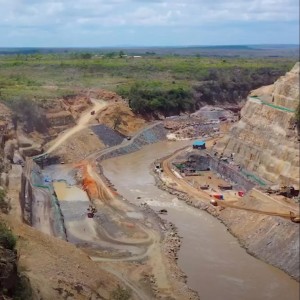
EIA’s Elephant Campaign Team has called for the Selous to be stripped of its World Heritage status due to the damage caused by construction of a massive hydropower project, but the World Heritage Committee stopped far short of taking such a step.
Wildlife Campaigner Rachel Mackenna explains why we were pressing for delisting and talks about what actually happened at the meeting and what might be next for the Selous.
Jul 15, 2021
Jul 15, 2021
21 min
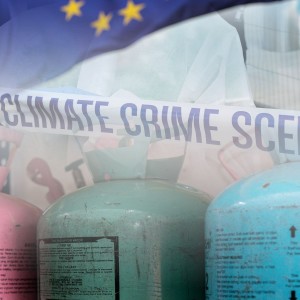
As another major bust of 17 tonnes of illegal HFC gases is made in Europe just days after the release of our new report Europe’s Most Chilling Crime, Climate Campaigner Sophie Geoghegan discusses the findings of our undercover investigations and looks at what needs to be done to tackle the illegal trade.
Read and download the report and watch our shocking short film.
Jun 11, 2021
Jun 11, 2021
10 min
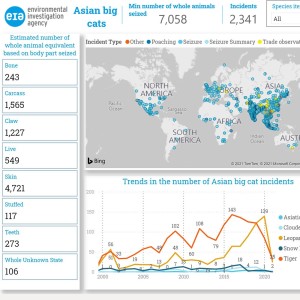
Plundering the world’s precious natural resources is a multi-billion dollar business and, as such, keeping on top of the facts, statistics, seizures and trends of environmental crime means understanding huge amounts of raw data – data which can now be much more easily managed with EIA’s new Global Environmental Crime Tracker.
This week, Mel Butler, our Senior Intelligence Analyst, talks about this innovative, first-of-its-kind tool, who will be able to use it and plans to expand it in the near future.
But don’t just take our word for the benefits of the Tracker – come and see for yourself when we host a live, free online public demonstration of its capabilities at 1.30pm BST on Tuesday, 15 June!
Sign up now to participate in the demo, which will feature a Q&A session after Mel has introduced the Tracker.
Apr 26, 2021
Apr 26, 2021
34 min
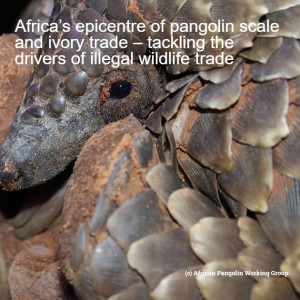
Just a few short years ago, pangolins were said to be the most trafficked species you’ve never heard of, poached for their meat and scales, but they became much more famous after they were potentially connected to the outbreak of the coronavirus pandemic and, most recently, EIA’s investigations revealed that West and Central Africa have become the epicentre for pangolin scale trafficking to Asia.
Chris Hamley, EIA’s Senior Pangolin Campaigner, takes a look at the issues with two of our in-country partners, Adams Cassinga, the Founding Director of Conserv Congo, in the Democratic Republic of the Congo, and Vincent Opyene, the CEO and Founder of the Natural Resource Conservation Network, in Uganda.
Mar 26, 2021
Mar 26, 2021
39 min
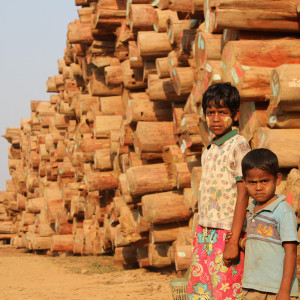
EIA’s Forests team has been working on the ground in Myanmar since the country began to emerge from under the shadow of brutal military dictatorship in 2011, exposing illegal timber trade and helping to provide the tools for meaningful reform of its natural resources sector – but all that changed with the coup on 1 February.
Faith Doherty, our Forests Campaigns Leader, and Alec Dawson, Forests Campaigner, give an overview of the situation and look at the implications for those seeking to import precious teak from the country.

Feb 26, 2021
Feb 26, 2021
17 min
As part of our special Investigator Week to celebrate the team’s work, in this episode we get to talk with Mel, our Senior Intelligence Analyst, and her two colleagues, intelligence analysts Martina and Denitsa, about what they do and why it’s key to our success.

Feb 16, 2021
Feb 16, 2021
26 min
Whether it’s in the oceans or on the land, the scale of plastic pollution is increasingly impossible to ignore and there’s a rising tide of tide of public opinion wanting to see it tackled.
Christina Dixon, EIA Senior Ocean Campaigner, reflects on the findings of our recent survey of UK supermarkets and talks about what’s been achieved – and what more needs to be done.

Feb 1, 2021
Feb 1, 2021
21 min
Jan 29, 2021
Jan 29, 2021
24 min
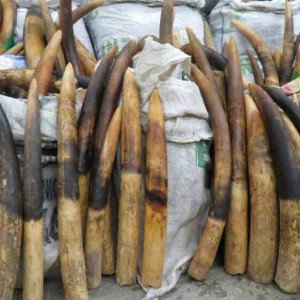
In the week that we released our new illegal wildlife trade report Out of Africa,
Senior Wildlife Campaigner Shruti Suresh and Senior Pangolin Campaigner Chris Hamley discuss its findings and what needs to be done to address the situation as a matter of urgency.
Nov 5, 2020
Nov 5, 2020
20 min
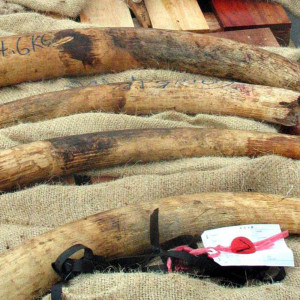
The global coronavirus pandemic has dramatically curtailed the way human society functions, impacting on just about every aspect of modern life – but some things never change and wildlife crime has continued throughout the crisis.
Just as many of us have been compelled to work from home, so too have wildlife criminals and our latest research shows that many of them have adapted swiftly to changing circumstances to continue their deadly trade.